
The Hidden Threat in Cleanrooms: Why Silicone-Free Tape & Labels Are Essential for Critical Manufacturing

Cleanrooms exist to protect the world’s most sensitive manufacturing processes—from semiconductor wafer fabrication and high-reliability electronics to aerospace/defense systems and pharmaceutical products. Every variable is tightly controlled: airflow, humidity, particulate levels, surfaces, gowning practices, and equipment protocols. Yet despite the rigor, one significant threat often goes completely unnoticed: silicone contamination introduced by everyday consumables.
While silicone is useful in many industrial applications, inside a cleanroom it becomes a silent disruptor. Silicone oils and residues can spread into ultra-thin, transparent films that are nearly impossible to detect, yet extremely difficult to remove. Even microscopic traces can interfere with adhesion, disrupt soldering and coating processes, weaken bonding strength, and undermine surface preparation steps. This invisible migration makes silicone one of the most persistent and insidious contaminants in modern manufacturing.
Its impact doesn’t stop there. Industry research has repeatedly shown that silicone contamination can trigger a range of downstream failures—lifted films, solder defects, compromised coatings, and weakened adhesive bonds. These issues often reveal themselves late in production, making them costly to diagnose and frequently requiring rework or scrappage. Worse still, silicone contamination has been connected to reductions in semiconductor die yield, electrical reliability issues in advanced electronics, material failures in aerospace systems, and surface or sterility concerns within medical and pharmaceutical environments. In industries measured in microns and nanometers, even the slightest contamination can jeopardize performance.
Across sectors, the risks are substantial. Semiconductor and electronics cleanrooms, for example, operate at tolerances where a molecular layer of silicone residue can interfere with EUV lithography, hinder optical sensors, and compromise wafer bonding. In aerospace and defense, silicone can disrupt conformal coatings or prevent proper bonding—failures that can have mission-critical consequences. And in medical and pharmaceutical manufacturing, silicone migration threatens surface preparation, coating adhesion, sterility, and compliance with stringent regulatory standards.
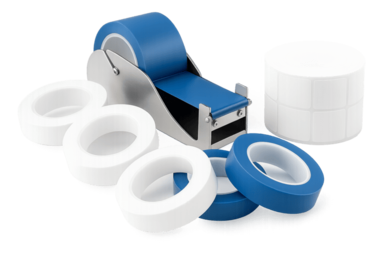
Despite these dangers, many cleanrooms unknowingly introduce silicone into their environments through one of the most common consumables: tape and labels. Used daily for sealing, packaging, marking, equipment labeling, or in-process work, these materials often contain silicone-based adhesives, release liners, or additives. Over time, they can transfer silicone residues to tools, surfaces, packaging, gloves, gowning, and even directly onto the products being manufactured. Because the contamination is invisible and spreads easily through contact, it remains one of the least recognized yet most impactful threats to cleanroom integrity.
To address this issue at the source, UltraTape has developed a comprehensive line of silicone-free cleanroom tapes and labels engineered specifically to protect high-purity environments. These products eliminate silicone migration while offering clean removal, dependable performance, and ISO-certified cleanroom manufacturing. With formulation and processing designed to ensure the highest quality, UltraTape’s silicone-free solutions help manufacturers avoid a hidden but serious source of contamination.
Silicone contamination is both dangerous and deceptive—easy to overlook, yet capable of compromising yield, reliability, and compliance. By replacing conventional tapes and labels with silicone-free alternatives, cleanroom operators can significantly reduce risk and maintain the integrity of their most advanced processes.
UltraTape provides a complete line of silicone-free, cleanroom-ready tape and labeling solutions designed to safeguard critical environments from this invisible threat.